Today we will learn ,how to recover share market losses and how you can improve your chances of long-term success.
Losing money in the share market can be frustrating, but it doesn’t mean your investing or trading journey is over. Every experienced trader and investor has faced losses at some point. The difference between successful market participants and those who quit is how they respond after a loss.
Instead of trying to recover your losses quickly, focus on improving your strategy, managing risk, and making better decisions. In this guide, you’ll learn practical ways to recover from share market losses while avoiding common mistakes that often make the situation worse.
Also check – (Daily routine of successful traders|JD Trading Zone) (The secret to consistency in trading| JD Trading Zone) (Why Do 90% of Traders Lose Money?) (Trading Psychology for Beginners: Master Your Emotions) (Best ETFs for Long-Term Investment in India)
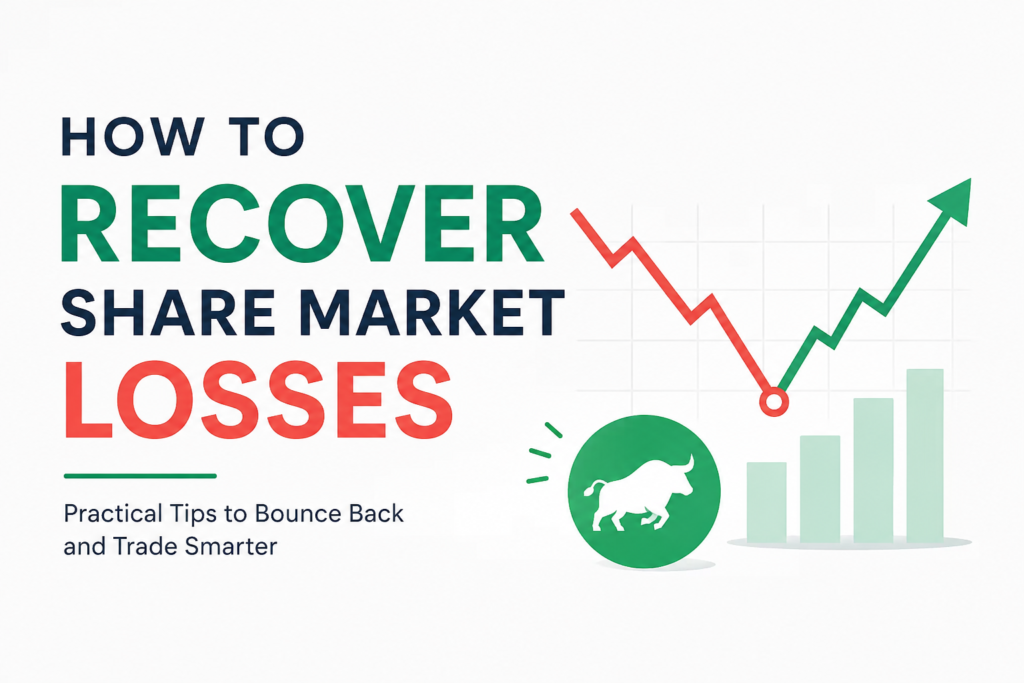
How to recover share market losses? Here :-
Why Do Traders and Investors Lose Money?
Before trying to recover losses, it’s important to understand what caused them. Learning from your mistakes helps prevent repeating them.
Some common reasons include:
– Trading without a proper plan
– Poor risk management
– Emotional buying and selling
– Using excessive leverage or margin
– Ignoring stop-loss orders
– Following social media tips without research
– Overtrading to recover previous losses
Identifying the real reason behind your losses is the first step toward improvement.
Accept the Loss Instead of Chasing It
Many beginners believe they must recover all their losses immediately. This mindset often leads to larger losses.
Accepting a loss is not giving up—it’s recognizing that losses are a normal part of the stock market.
Ask yourself:
– Did I follow my trading rules?
– Was the loss caused by market conditions or my mistakes?
– What can I improve before placing the next trade?
Keeping a trading journal can help answer these questions honestly.
Stop Trading for a Short Time
If you’ve experienced several losing trades in a row, take a short break.
During this time:
– Review your past trades.
– Study your mistakes.
– Read educational material.
– Practice using historical charts.
A break helps reduce emotional decisions and restores confidence.
Review Every Losing Trade
Don’t simply move on after a loss.
For each trade, note:
– Entry price
– Exit price
– Stop-loss level
– Target
– Position size
– Reason for entering
– Mistakes made
– Lessons learned
Over time, you’ll notice patterns in your trading behavior that you can improve.
Focus on Risk Management
Good traders don’t avoid losses—they control them.
Simple risk management rules include:
– Risk only 1–2% of your capital on a single trade.
– Always use a stop-loss.
– Never increase your position size after a loss.
– Maintain a favorable risk-to-reward ratio whenever possible.
Protecting your capital is more important than making quick profits.
Avoid Revenge Trading
Revenge trading happens when traders place impulsive trades to recover money immediately.
Warning signs include:
– Entering trades without analysis
– Increasing position size after losing
– Ignoring your trading plan
– Feeling angry or desperate while trading
The best solution is to stop trading until you’re calm and can think objectively.
Improve Your Trading Strategy
A strategy that works in one market condition may not work in another.
Review questions such as:
– Are your entry signals reliable?
– Are you exiting too early?
– Is your stop-loss too tight?
– Are you trading during highly volatile periods without a plan?
Backtest your strategy using historical data before risking real money again.
Trade With Smaller Position Sizes
After a significant loss, reduce your position size.
Benefits include:
– Lower emotional pressure
– Better decision-making
– Opportunity to rebuild confidence
– Reduced financial risk
Your goal should be consistency, not rapid recovery.
Build Discipline Instead of Searching for Quick Profits
Many beginners constantly change strategies after a few losses.
Instead:
– Follow one tested strategy.
– Stick to your rules.
– Maintain a trading journal.
– Review your performance weekly.
– Focus on gradual improvement.
Consistency produces better long-term results than constantly chasing new methods.
Continue Learning
The stock market changes over time, and continuous learning is essential.
Study topics like:
– Price action
– Risk management
– Market psychology
– Technical analysis
– Fundamental analysis
– Position sizing
Education is one of the best investments you can make as a trader or investor.
How Long Does It Take to Recover Losses?
There is no fixed timeline.
Recovery depends on:
– The size of the loss
– Your trading capital
– Your risk management
– Market conditions
– Your discipline
Trying to recover losses quickly often leads to poor decisions. Steady, consistent progress is a more sustainable approach.
Mistakes to Avoid After a Big Loss
Avoid these common errors:
– Trading emotionally
– Doubling your investment after losing
– Borrowing money to trade
– Following random tips
– Ignoring stop-loss orders
– Overtrading
– Changing strategies every week
– Expecting overnight recovery
Avoiding these mistakes can significantly improve your long-term performance.
Tips for Beginners
If you’re new to the stock market:
– Start with a small amount of capital.
– Learn before risking more money.
– Keep realistic expectations.
– Protect your capital first.
– Focus on consistency instead of chasing high returns.
– Be patient and continue improving your skills.
Frequently Asked Questions (FAQs)
Can I recover stock market losses?
→ Yes, many traders and investors recover losses over time through disciplined risk management, continuous learning, and consistent execution. There is no guarantee of recovery, and outcomes depend on your decisions and market conditions.
Should I invest more money after a loss?
→ Not automatically. Adding more capital without identifying the reason for previous losses can increase your risk. Review your strategy first.
Is revenge trading a good idea?
→ No. Revenge trading often leads to emotional decisions and larger losses.
Should beginners use leverage?
→ Beginners should be cautious with leverage because it can magnify both profits and losses. It’s generally better to gain experience before using leveraged products.
What is the most important rule after a loss?
→ Protect your remaining capital, analyze your mistakes, and return to the market only with a clear plan.
Every market participant experiences losses. What matters is how you respond. Instead of chasing quick recoveries, focus on improving your knowledge, following a disciplined strategy, and managing risk effectively.
Successful trading isn’t about never losing—it’s about keeping losses manageable while allowing good decisions to compound over time. By learning from each mistake and staying patient, you give yourself the best chance to become a more confident and consistent trader.
«Disclaimer: This article is for educational purposes only and should not be considered financial or investment advice. Always conduct your own research and consider consulting a qualified financial advisor before making investment decisions.»
Pingback: The dark reality of stock market trading - jdtradingzone.com
Pingback: Can Trading Really Change Your Life? - jdtradingzone.com
Pingback: How is trading better than other professions - jdtradingzone.com
Pingback: The Biggest Challenges Every Trader Faces - jdtradingzone