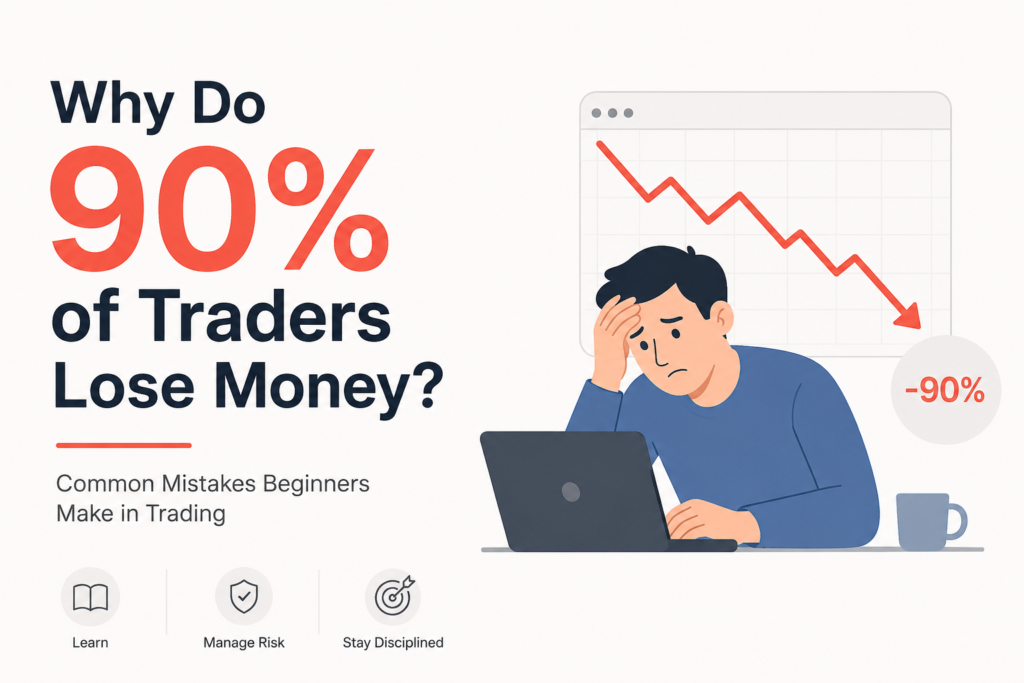
Why do 90% of traders fail?
In this guide, you will learn Why Do 90% of Traders Lose Money? and how you can improve your chances of long-term success.
Trading looks exciting from the outside. Social media is full of screenshots showing huge profits, luxury lifestyles, and “easy money” strategies. But the reality is very different. A large number of traders lose money because they enter the market without proper knowledge, discipline, or risk management.
If you are a beginner in stock market trading, understanding these mistakes can help you avoid becoming part of that losing majority.
The Truth About Trading
Trading is not gambling, but many people treat it like one. Markets move based on news, emotions, demand and supply, global events, and institutional activity. Without a plan, beginners often make emotional decisions.
Most traders lose money because they focus only on profits and ignore risk.
Successful trading is less about finding a “magic indicator” and more about controlling losses, staying disciplined, and managing emotions.
Here the list of Why do 90% traders lose money?
1. Lack of Proper Knowledge
One of the biggest reasons traders fail is entering the market without learning the basics.
Many beginners start trading after watching short videos or social media reels. They open a trading account and begin buying options, futures, or stocks without understanding concepts like:
• Support and resistance
• Risk-reward ratio
• Stop loss
• Market trends
• Position sizing
• Price action
• Volatility
Without knowledge, trading becomes guesswork.
How to Avoid This Mistake
Spend time learning before risking real money. Start with:
• Candlestick patterns
• Market structure
• Risk management
• Trading psychology
• Technical analysis basics
Practice on paper trading or with small capital first.
2. No Risk Management
Many traders focus only on profits. They ignore how much they can lose in a single trade.
This is one of the fastest ways to destroy a trading account.
A good trader understands that losses are part of trading. The goal is not to win every trade but to protect capital.
Example of Risk Management
Suppose your trading capital is ₹50,000. If you risk only 1% per trade, your maximum loss is ₹500.
This simple rule protects you from large drawdowns.
A common risk-reward ratio used by professional traders is:
Rrr= potential profit ÷ potential loss
If your reward is bigger than your risk, you do not need a very high win rate to stay profitable.
3. Emotional Trading
Fear and greed are the two biggest enemies of traders.
Fear Causes:
• Early exits from winning trades
• Hesitation in taking valid setups
• Panic selling
Greed Causes:
• Overtrading
• Holding losing trades too long
• Taking oversized positions
Emotional decisions usually lead to poor results.
Solution
Create a trading plan and follow it strictly:
• Entry point
• Stop loss
• Target
• Maximum daily loss
A disciplined trader behaves like a business owner, not a gambler.
4. Overtrading
Many beginners think more trades mean more profits. In reality, overtrading often leads to:
• Higher brokerage costs
• More emotional stress
• Lower trade quality
Professional traders wait patiently for high-probability setups.
Sometimes the best trade is no
5. Using Too Much Leverage
Leverage allows traders to control large positions with small capital. While leverage can increase profits, it can also multiply losses very quickly.
This is especially dangerous in:
• Options trading
• Futures trading
• Intraday margin trading
A single bad trade can wipe out an account if leverage is too high.
Smart Approach
Use smaller position sizes and avoid risking large amounts on one trade.
Survival in the market is more important than quick profits.
6. No Trading Strategy
Many traders enter trades randomly based on tips, news, or social media influencers.
Without a tested strategy, consistency becomes impossible.
A good trading strategy includes:
• Clear entry rules
• Stop-loss placement
• Exit rules
• Risk management
• Market conditions for trading
The strategy does not need to be complicated. Even simple systems can work when followed with discipline.
7. Ignoring Trading Psychology
Trading psychology is often more important than technical analysis.
Two traders can use the same strategy and get completely different results because of emotional control.
Common psychological mistakes include:
• Revenge trading after losses
• Chasing missed trades
• Breaking rules after a winning streak
• Increasing lot size emotionally
Consistency comes from discipline, not excitement.
8. Unrealistic Expectations
Many beginners enter trading expecting to double their money quickly.
This mindset creates pressure and leads to risky decisions.
Professional trading is usually slow and consistent. Even experienced traders focus on protecting capital first.
Realistic Goal
Instead of trying to become rich overnight:
• Focus on learning
• Improve consistency
• Build discipline
• Grow capital gradually
Trading is a marathon, not a sprint.
9. Copying Others Blindly
Following random Telegram channels, YouTube tips, or social media calls is risky.
What works for someone else may not work for you because:
• Risk tolerance differs
• Capital size differs
• Experience differs
• Trading style differs
Successful traders build their own system through practice and learning.
10. Lack of Patience
Patience is one of the most underrated trading skills.
Beginners often:
• Enter trades too early
• Exit too quickly
• Force trades in sideways markets
Good traders wait for confirmation and high-quality setups.
Patience improves decision-making and reduces unnecessary losses.
What Successful Traders Do Differently
Successful traders usually follow these habits:
They Manage Risk
They protect capital before thinking about profits.
They Stay Disciplined
They follow their trading plan consistently.
They Keep Learning
Markets change constantly, so learning never stops.
They Accept Losses
Losses are treated as business expenses, not personal failures.
They Focus on Long-Term Growth
They avoid shortcuts and unrealistic expectations.
A Simple Formula for Long-Term Trading Success
Consistency in trading often comes from controlled risk and disciplined execution.
One useful concept is compounding growth:
Even small consistent returns can grow significantly over time when combined with discipline and patience.
Final Thoughts
The reason why 90% of traders lose money is not because trading is impossible. Most fail because they:
• Ignore risk management
• Trade emotionally
• Expect quick profits
• Lack discipline
• Enter the market without proper education
Trading success comes from patience, consistency, and continuous learning.
If you are a beginner, focus first on protecting your capital and building strong habits. Profits usually come later.
Remember: surviving in the market is the first step toward becoming profitable.
Frequently Asked Questions (FAQs)
Is trading risky for beginners?
→ Yes, trading involves risk. Beginners should start with small capital and focus on learning before risking large amounts.
Can beginners become profitable traders?
→ Yes, but it requires education, discipline, risk management, and realistic expectations.
What is the biggest mistake traders make?
→ Most traders fail because of poor risk management and emotional decision-making.
How long does it take to become a profitable trader?
→ It depends on learning speed, discipline, and practice. For many traders, it can take months or even years.
Is trading better than investing?
→ Trading and investing serve different goals. Investing is generally more suitable for long-term wealth building, while trading requires active involvement and higher risk tolerance.
If this blog makes sense to you give your feedback in comments and stay tuned for more information about JD Trading Zone.
Pingback: The Biggest Challenges Every Trader Faces - jdtradingzone.com
Pingback: Why Is It So Difficult to Learn Trading? - jdtradingzone.com
Pingback: How is trading better than other professions - jdtradingzone.com
Pingback: Can Trading Really Change Your Life? - jdtradingzone