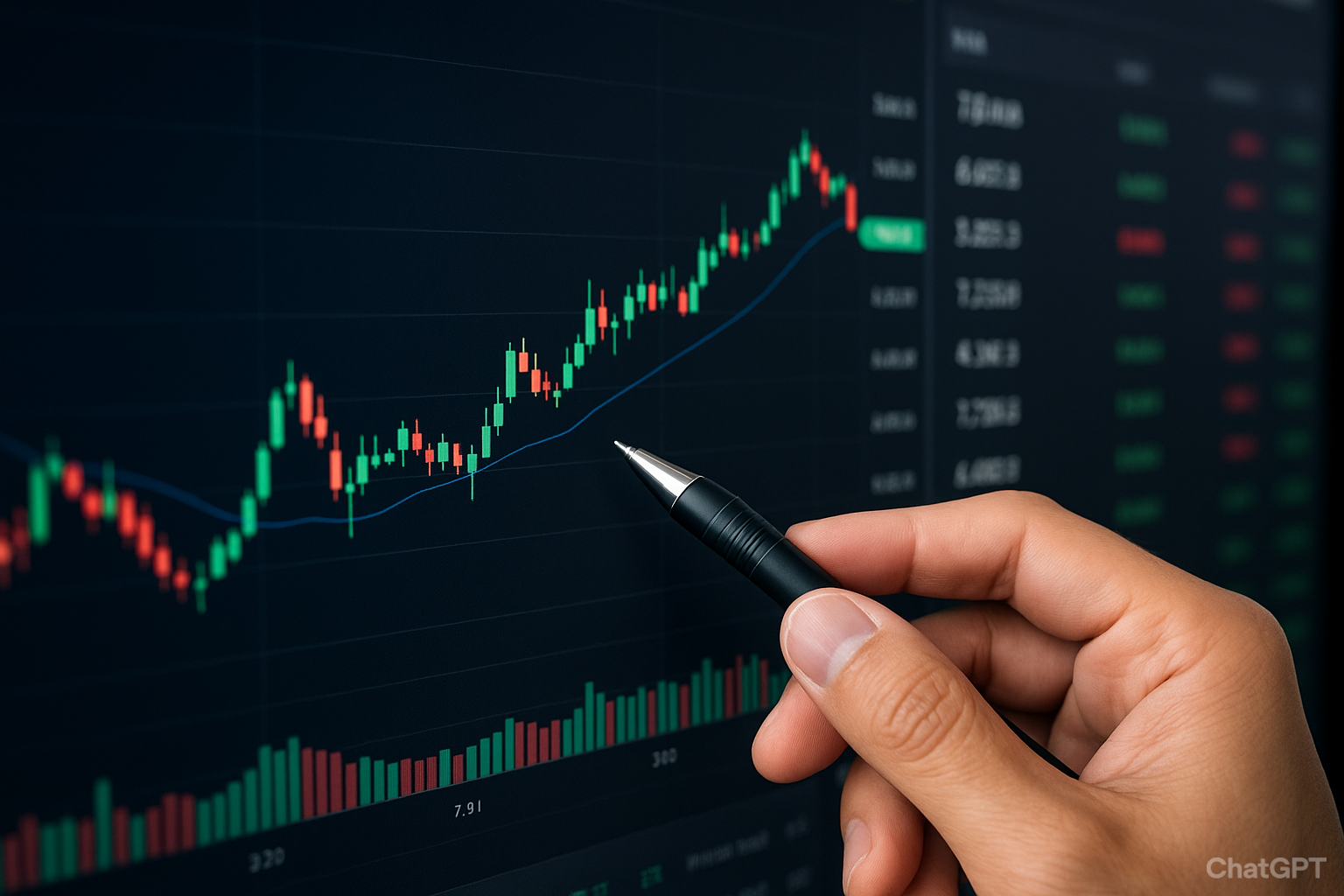
Today, you’ll learn:Swing Trading vs Intraday Trading: Which Is Better for Beginners? In simple words
Welcome to JD Trading Zone
Many beginners enter the stock market with one common question:
→ Should I start with swing trading or intraday trading?
Both trading styles can be profitable, but they require different skills, time commitments, and risk management. Choosing the wrong style can lead to unnecessary losses and frustration.
Also check:- (How to Create a Trading Plan That Actually Works) (Trading Psychology: How to Control Fear, Greed, and FOMO) (What Is Risk-Reward Ratio? Why Every Trader Should Use It) (How to Choose Stocks for Intraday Trading Every Morning) (Best Time Frame for Intraday Trading)
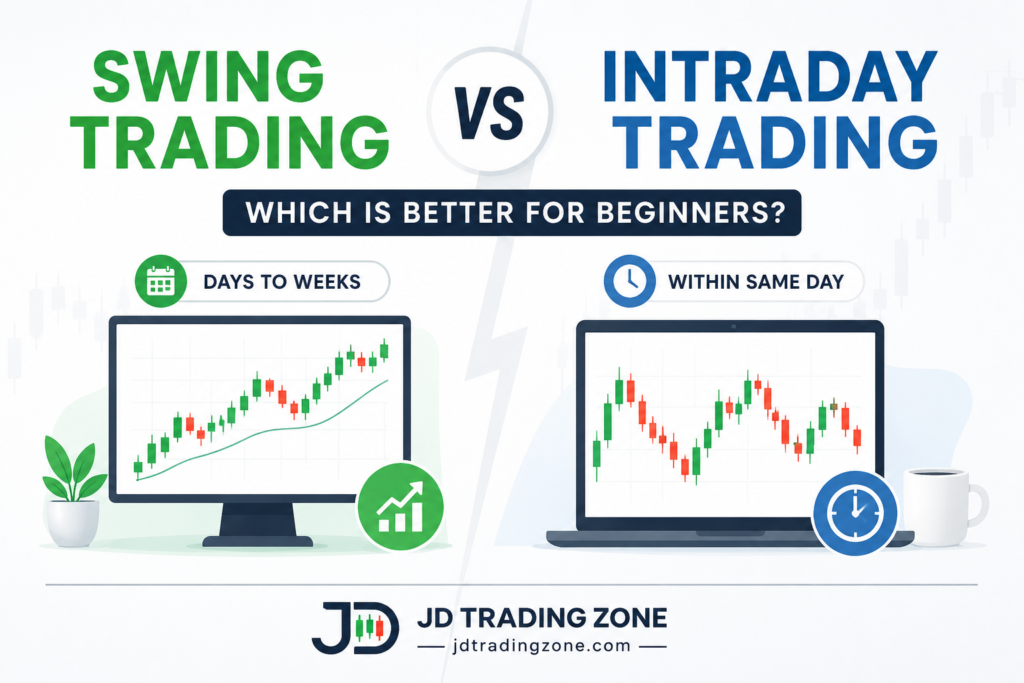
Swing Trading vs Intraday Trading: Which is good for beginners
What Is Swing Trading?
Swing trading means buying or selling a stock and holding the position for several days or even a few weeks to capture a
larger price movement.
The goal is to profit from short- to medium-term trends instead of daily price fluctuations.
→ Example
Suppose you buy a stock at ₹500 after identifying a bullish breakout.
You expect it to reach ₹540 within two weeks.
You hold the stock until your target or stop-loss is hit.
This is swing trading.
What Is Intraday Trading?
Intraday trading means buying and selling a stock within the same trading day.
No position is carried overnight.
The objective is to benefit from small price movements that happen during market hours.
→ Example
You buy a stock at ₹800 at 10:00 AM.
It rises to ₹810 by 11:30 AM.
You book your profit before market close.
This is intraday trading.
Swing Trading vs Intraday Trading at a Glance
→ Feature
• Holding Period
• Time Required
• Stress Level
• Trading Frequency
• Overnight Risk
• Capital Requirement
• Best For
→ Swing Trading
• Days to weeks
• Low to moderate
• Lower
• Fewer trades
• Yes
• Moderate
• Working professionals and beginners
→ Intraday Trading
• Same day
• High
• Higher
• Multiple trades daily
• No
• Depends on strategy
• Experienced active traders
How Swing Trading Works
Swing traders look for stocks that are likely to move over the coming days.
They use:
• Support and resistance
• Trend analysis
• Candlestick patterns
• Volume analysis
• Moving averages
• Price action
After identifying a quality setup, they place their trade with a predefined stop-loss and target.
Then they wait patiently for the trade to develop.
How Intraday Trading Works
Intraday traders focus on small market movements during a single trading session.
They often use:
• VWAP
• EMA
• MACD
• RSI
• Price action
• Breakout strategies
Trades usually last from a few minutes to several hours.
Quick decision-making is essential.
Advantages of Swing Trading
1. Less Screen Time
→ You don’t need to watch charts all day.
Many swing traders analyze the market after trading hours.
2. Lower Stress
→ Since trades develop over several days, there is less pressure to make instant decisions.
3. Better for Working Professionals
→ People with jobs or college commitments often find swing trading easier to manage.
4. Bigger Price Moves
→ Holding positions for longer periods allows traders to capture larger trends.
5. Easier for Beginners
→ New traders have more time to analyze their trades without feeling rushed.
Disadvantages of Swing Trading
• Overnight news can affect stock prices.
• Capital remains tied up for several days.
• Patience is required.
• Market gaps can impact stop-loss levels.
Advantages of Intraday Trading
1. No Overnight Risk
→ All positions are closed before the market ends.
Unexpected overnight events won’t affect your trades.
2. Daily Opportunities
→ The market creates multiple setups every day.
3. Faster Learning
→ Since you take more trades, you receive feedback on your strategy more quickly.
4. Capital Can Be Reused
→ Your funds become available again after the trading session ends.
Disadvantages of Intraday Trading
• Requires constant attention.
• Emotionally demanding.
• Fast decisions can lead to mistakes.
• Overtrading is common.
• Brokerage and transaction costs can add up.
Time Commitment
→ Swing Trading
Usually requires:
• 30–60 minutes for daily analysis
• Occasional trade management
→ Intraday Trading
Often requires:
• 4–6 hours of market monitoring
• Quick execution
• Continuous focus
If you have a full-time job, swing trading is generally easier to manage.
Risk Comparison
Both styles involve risk, but the nature of the risk differs.
→ Swing Trading Risks
• Overnight gaps
• Earnings announcements
• Global market events
→ Intraday Risks
• High volatility
• Emotional trading
• Sudden price reversals
• Overtrading
In either approach, using a stop-loss is essential.
Which Trading Style Requires More Skill?
Generally, intraday trading demands:
• Faster decision-making
• Better emotional control
• Strong discipline
• Consistent execution
Swing trading allows more time to analyze charts and think through decisions, making it more forgiving for beginners.
Which Trading Style Is Better for Beginners?
For most beginners, swing trading is often the better starting point because:
• It involves less stress.
• It requires less screen time.
• It encourages patience and planning.
• There are fewer impulsive decisions.
• It’s easier to balance with work or studies.
After building confidence and consistency, traders who enjoy fast-paced markets can gradually explore intraday trading.
Can You Do Both?
Yes.
Many experienced traders combine both styles.
For example:
• Swing trading for long-term opportunities.
• Intraday trading for short-term market setups.
However, beginners should avoid learning both at the same time. Master one approach before moving to another.
Tips for Beginners
→ Start Small
Use a modest amount of capital while learning.
→ Learn Risk Management
Never risk a large portion of your trading capital on a single trade.
→ Follow a Trading Plan
Define your:
• Entry
• Stop-loss
• Profit target
• Position size
before placing a trade.
→ Keep a Trading Journal
Record every trade and review your performance regularly.
→ Focus on Quality, Not Quantity
A few well-planned trades are better than many impulsive ones.
Common Mistakes Beginners Make
• Trading without a plan
• Ignoring stop-losses
• Taking oversized positions
• Chasing fast-moving stocks
• Overtrading
• Letting emotions control decisions
• Expecting quick profits
Avoiding these mistakes can significantly improve your learning journey.
Frequently Asked Questions (FAQs)
Is swing trading safer than intraday trading?
→ Swing trading usually involves less time pressure, but it carries overnight market risk. Neither style is completely safe, and both require disciplined risk management.
Can beginners start with intraday trading?
→ Yes, but beginners should first practice with small position sizes or paper trading. Intraday trading demands quick decisions and emotional discipline.
Which trading style requires less time?
→ Swing trading generally requires much less daily screen time than intraday trading.
Which style has higher profit potential?
→ Profit depends more on your strategy, discipline, and risk management than on the trading style itself. Both can be profitable when executed consistently.
Do I need technical analysis for both?
→ Yes. Understanding chart patterns, trends, support and resistance, and risk management is helpful for both swing and intraday trading.
Swing Trading vs Intraday Trading: Which Is Better for Beginners?
Final takeaway
Choosing between swing trading and intraday trading depends on your personality, schedule, and experience.
If you’re just starting your trading journey, swing trading often provides a smoother learning curve. It allows you to make thoughtful decisions, spend less time in front of the screen, and focus on developing good habits.
Intraday trading can be rewarding, but it requires greater discipline, faster execution, and emotional control. Many successful traders begin with swing trading and move into intraday trading only after building confidence and a proven strategy.
Remember, there is no perfect trading style—only the one that matches your goals and risk tolerance. Stay patient, keep learning, manage your risk carefully, and prioritize consistency over quick profits.
Pingback: Top 10 Free Trading Tools Every Trader Should Use - jdtradingzone.com
Pingback: Common Chart Patterns Every Trader Must Know - jdtradingzone.com