
How to create a trading plan is really an important thing to learn if you really want to become a profitable trader.
Welcome to JD Trading Zone
Many beginners enter the stock market with excitement but without a clear plan. They watch random YouTube videos, follow social media tips, or copy other traders without understanding the reasons behind a trade. While this may work occasionally, it is not a reliable way to build long-term success.
A trading plan is like a roadmap. It tells you what to trade, when to trade, how much to risk, and when to exit. Instead of making emotional decisions, you follow a predefined process that keeps your trading consistent.
Also check:- (Trading Psychology: How to Control Fear, Greed, and FOMO) (What Is Risk-Reward Ratio? Why Every Trader Should Use It) (How to Choose Stocks for Intraday Trading Every Morning) (Best Time Frame for Intraday Trading) (Top 10 mistakes new traders make and how to avoid them)
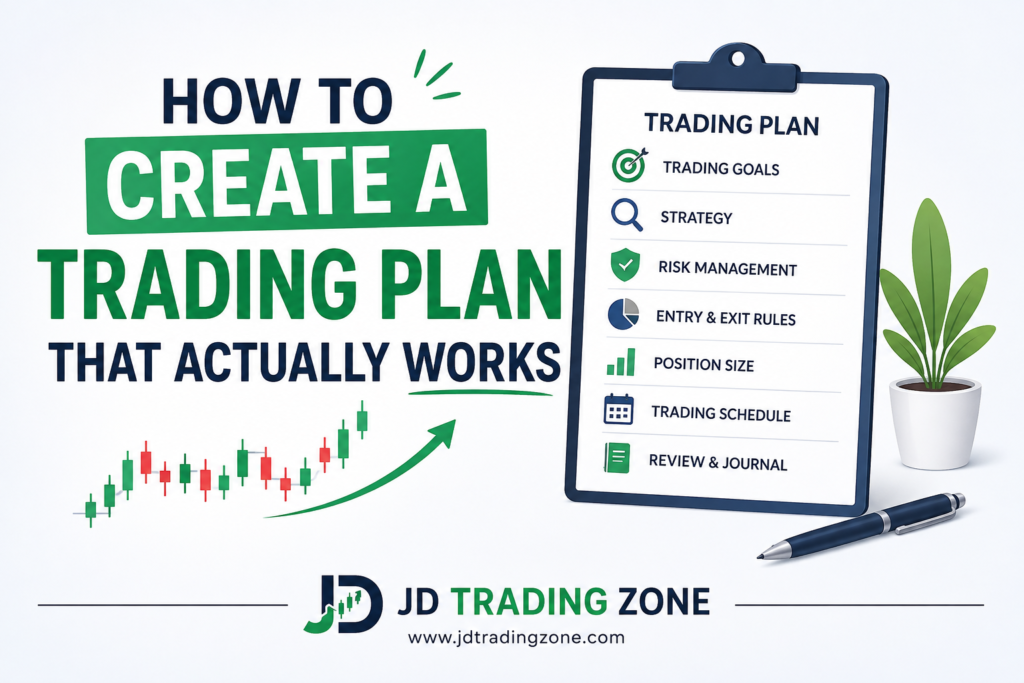
Create a Trading Plan That Actually Works
What Is a Trading Plan?
A trading plan is a written document that defines your trading strategy and rules before you enter the market.
It includes:
• Your trading goals
• Markets you trade
• Entry and exit rules
• Risk management
• Position sizing
• Trading schedule
• Review process
A good trading plan removes guesswork and helps you make decisions based on logic instead of emotions.
Why Every Trader Needs a Trading Plan
Without a trading plan, traders often:
• Take random trades
• Risk too much money
• Exit winning trades too early
• Hold losing trades too long
• Overtrade after losses
• Trade based on fear or greed
With a proper plan, you gain:
• Better discipline
• Consistent decision-making
• Improved risk control
• Easier performance tracking
• Higher confidence
Remember, professional traders follow systems—not emotions.
Step 1: Define Your Trading Goal
Start by asking yourself why you want to trade.
Examples include:
• Learn trading skills
• Build long-term consistency
• Generate additional income
• Grow your capital gradually
Avoid unrealistic goals like:
• Doubling your money every month
• Becoming rich in a few weeks
• Winning every trade
Focus on steady improvement rather than quick profits.
Step 2: Choose Your Trading Style
Different traders have different personalities.
→ Scalping
• Trades last seconds to minutes
• Requires fast decision-making
Suitable for experienced traders.
→ Intraday Trading
• Positions closed on the same day
• Requires active monitoring
Popular among beginners after gaining basic knowledge.
→ Swing Trading
• Trades held for several days or weeks
• Less stressful than intraday
Ideal for people with full-time jobs.
→ Positional Trading
• Trades held for months
• Focuses on larger market trends
Best for patient investors.
Choose one style and master it before trying another.
Step 3: Decide What You Will Trade
Avoid trading everything.
For example, you may trade only:
• Nifty 50 stocks
• Bank Nifty
• Large-cap stocks
• Selected sectors
• Index ETFs
Limiting your watchlist improves focus.
Step 4: Create Clear Entry Rules
Your trading plan should explain exactly why you enter a trade.
Example rules:
• Price above VWAP
• Trend confirmed using moving averages
• Breakout with strong volume
• Support or resistance confirmation
• Bullish candlestick pattern
The more objective your rules, the fewer emotional decisions you’ll make.
Step 5: Define Your Exit Rules
Many beginners know when to enter but not when to exit.
Your plan should include:
→ Stop Loss
Always decide your maximum acceptable loss before entering.
Example:
• 1% account risk per trade
• Technical stop below support
• Profit Target
Use a realistic target.
Many traders prefer:
• Risk-Reward Ratio of 1:2
• Risk-Reward Ratio of 1:3
This means risking ₹100 to potentially earn ₹200 or ₹300.
Step 6: Decide Position Size
Never invest all your money in one trade.
Position sizing depends on:
• Total trading capital
• Risk per trade
• Stop-loss distance
Example:
• Trading Capital = ₹1,00,000
• Maximum Risk = 1%
• Maximum Loss = ₹1,000
Your position size should be calculated so your loss does not exceed ₹1,000 if the stop loss is hit.
Step 7: Set Daily Risk Limits
Professional traders protect their capital.
Examples:
• Maximum 2 losing trades per day
• Stop trading after 3% daily loss
• Maximum five trades per day
These limits prevent emotional revenge trading.
Step 8: Define Your Trading Schedule
Trade only during your planned hours.
Example:
• Pre-market preparation
• Market opening analysis
• Trading session
Review session after market close
Avoid sitting in front of charts all day.
Step 9: Maintain a Trading Journal
A trading journal helps you improve over time.
Record:
• Entry price
• Exit price
• Stop loss
• Profit or loss
• Screenshot
• Trade reason
• Emotional state
Review your journal every week.
Patterns become easier to identify.
Step 10: Review Your Performance
A trading plan is not permanent.
Review questions:
• Did you follow your rules?
• Which setups worked best?
• Which mistakes repeated?
• Did emotions affect decisions?
• What should improve next week?
Small improvements lead to long-term success.
Common Mistakes While Creating a Trading Plan
→ Making Rules Too Complicated
Simple plans are easier to follow consistently.
→ Changing Strategy Every Week
Every strategy experiences winning and losing periods.
Give enough time before making changes.
→ Ignoring Risk Management
Even a great strategy cannot survive poor risk control.
Capital protection should always come first.
→ Not Writing the Plan Down
A trading plan in your mind is easy to forget.
Write everything clearly.
→ Not Reviewing Results
Improvement comes from regular analysis, not just more trades.
Tips to Stick to Your Trading Plan
• Trade only when your setup appears.
• Never increase position size after losses.
• Avoid trading because of social media tips.
• Accept losing trades as part of the process.
• Focus on following your rules rather than daily profits.
• Stay patient and consistent.
Benefits of Following a Trading Plan
A good trading plan helps you:
• Reduce emotional trading
• Improve discipline
• Protect trading capital
• Build confidence
• Track progress effectively
• Develop consistent habits
• Improve long-term performance
Frequently Asked Questions (FAQs)
Can beginners create a trading plan?
→ Yes. In fact, beginners benefit the most from having a written trading plan because it reduces emotional decisions and creates a structured learning process.
How often should I update my trading plan?
→ Review it weekly or monthly. Make changes only after analyzing a meaningful number of trades, not after one or two losses.
Is one trading strategy enough?
→ Yes. Mastering one well-tested strategy is generally better than constantly switching between multiple strategies.
Should every trade follow the trading plan?
→ Absolutely. Taking trades outside your plan makes it difficult to evaluate your performance and improve consistently.
Can a trading plan guarantee profits?
→ No. No trading plan can eliminate losses. Its purpose is to improve consistency, manage risk, and help you make disciplined decisions over time.
How to Create a Trading Plan That Actually Works
A successful trader is not someone who predicts every market move. A successful trader is someone who follows a well-defined process with discipline.
Your trading plan should clearly define what you trade, when you trade, how much you risk, and how you review your performance. While losses are a normal part of trading, a solid plan helps keep them manageable and prevents emotional decisions.
If you’re just starting your trading journey, don’t wait for the “perfect” strategy. Create a simple written trading plan, test it with discipline, maintain a trading journal, and refine it as you gain experience. Consistency in following a good plan often matters more than finding a perfect setup.
Pingback: Swing Trading vs Intraday Trading: Which Is Better for Beginners? - jdtradingzone.com
Pingback: Common Chart Patterns Every Trader Must Know - jdtradingzone