Today, you’ll learn Top 10 mistakes new traders make and how to avoid them , why they happen, and practical steps to avoid them.
Welcome to JD Trading Zone
Every successful trader has one thing in common—they made mistakes, learned from them, and improved over time.
The problem is that many beginners repeat the same mistakes without understanding why they happen. This often leads to unnecessary losses, frustration, and eventually quitting trading altogether.
The good news is that most beginner mistakes can be avoided with the right knowledge, discipline, and mindset.
Disclaimer: This article is for educational purposes only and should not be considered financial or investment advice.
Also check:- (Price action trading explained learn without indicator) (What is support and resistance? complete beginner guide) (Best Indicators for Intraday Trading in India) (How to Read Candlestick Charts for Beginners) (Complete beginners guidance about the stock market)
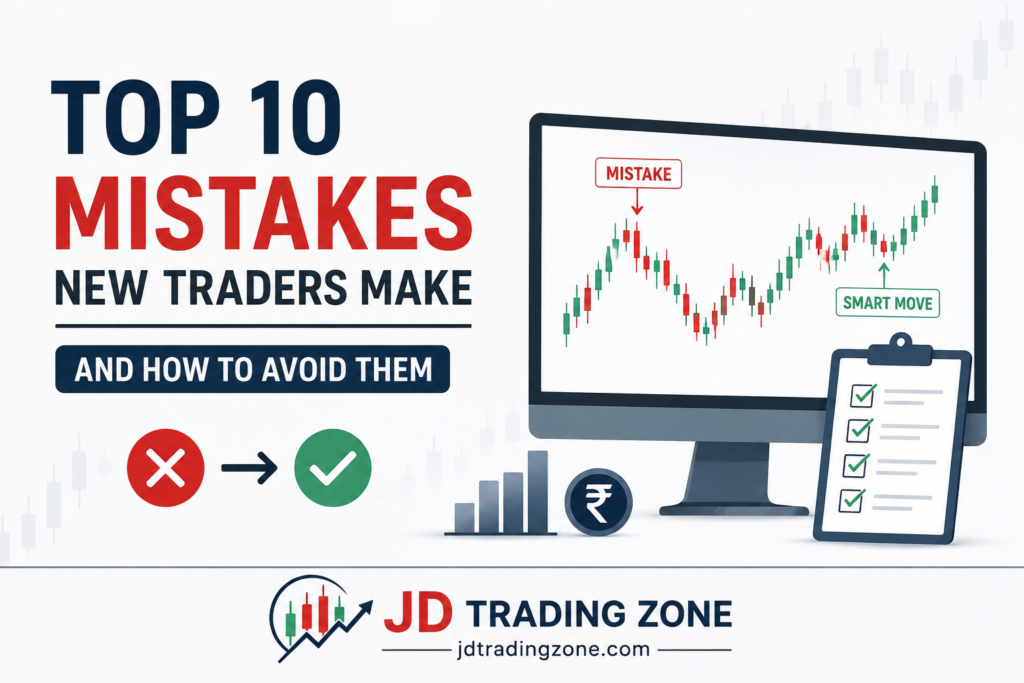
Top 10 Mistakes New Traders Make (And How to Avoid Them)
Why Beginners Lose Money in Trading
Many people believe beginners lose because they don’t know enough technical indicators.
In reality, the biggest reasons are:
• Lack of discipline
• Poor risk management
• Emotional decision-making
• Unrealistic expectations
• Inconsistent trading plans
Learning to avoid these problems is often more important than finding the “perfect strategy.”
1. Trading Without a Plan
Many beginners open a chart and immediately start looking for trades.
This usually leads to random entries based on emotions instead of logic.
→ Why This Is a Problem
Without a trading plan, you don’t know:
• When to enter
• When to exit
• How much to risk
• Which market conditions to trade
As a result, every decision becomes emotional.
→ How to Avoid It
Create a written trading plan that includes:
• Your trading style
• Entry conditions
• Exit rules
• Stop-loss placement
• Position size
• Daily loss limit
Follow the same process before every trade.
2. Risking Too Much on One Trade
Many beginners believe risking more money will help them recover losses faster.
Instead, one bad trade can damage the entire account.
→ Better Approach
Most experienced traders risk only 1–2% of their trading capital on a single trade.
This allows them to survive losing streaks while protecting their capital.
Remember:
→ Protecting your capital is your first priority.
3. Ignoring Stop Loss
A common beginner mistake is removing the stop loss after the trade starts losing.
They hope the market will reverse.
Sometimes it does.
Many times it doesn’t.
Small losses become large losses.
→ How to Avoid It
Always decide your stop loss before entering a trade.
Accept small losses as part of trading.
Professional traders lose
4. Overtrading
Many beginners believe:
“More trades = More profits.”
The opposite is often true.
Poor-quality trades usually increase losses.
→ Signs of Overtrading
• Trading out of boredom
• Entering without confirmation
• Revenge trading
• Trading after reaching daily loss limits
Solution:
Trade only when your setup appears.
Sometimes the best trade is no trade.
5. Chasing the Market
After seeing a strong price move, beginners often enter too late because they fear missing out.
This is known as FOMO (Fear of Missing Out).
Unfortunately, many late entries happen just before the market reverses.
→ Better Practice
Wait patiently for:
• Pullbacks
• Confirmations
• Planned entry levels
Missing one trade is far better than taking a bad trade.
6. Using Too Many Indicators
Some traders fill their charts with:
• RSI
• MACD
• Bollinger Bands
• Stochastic
• Multiple Moving Averages
• Several custom indicators
Instead of making trading easier, this creates confusion.
→ Keep It Simple
Many successful traders use:
• Price Action
• Support and Resistance
• Trend analysis
• Volume
• VWAP (for intraday trading)
A clean chart helps you focus on price.
7. Letting Emotions Control Decisions
Trading is not only about charts.
It’s also about controlling yourself.
Common emotions include:
• Fear
• Greed
• Hope
• Anger
• Excitement
These emotions often cause poor decisions.
Solution:
Create rules before entering the trade.
Then follow those rules without changing them during the trade.
Discipline beats emotion.
8. Expecting Quick Riches
Many advertisements make trading look easy.
Reality is different.
Professional traders spend years developing their skills.
Consistent profitability takes:
• Practice
• Patience
• Experience
• Risk management
Treat trading as a skill, not a lottery ticket.
9. Not Keeping a Trading Journal
Many beginners never review their previous trades.
As a result, they continue making the same mistakes.
What to Record
For every trade, write down:
• Entry price
• Exit price
• Stop loss
• Target
• Reason for entry
• Screenshot
• Emotion during the trade
• Final result
After reviewing 50–100 trades, you’ll discover patterns in your strengths and weaknesses.
10. Giving Up Too Early
Many new traders quit after a few losing weeks.
Every profession requires time to master.
Trading is no different.
Instead of asking:
“How quickly can I make money?”
Ask:
“How can I improve by 1% every week?”
Small improvements lead to big results over time.
Beginner Traders
Here are a few habits that can make a significant difference:
• Learn one strategy before trying another.
• Focus on capital preservation.
• Trade only when your setup is present.
• Avoid social media trading tips without verification.
• Never trade with borrowed money.
• Keep realistic profit expectations.
• Continue learning through books, charts, and practice.
A Simple Daily Trading Checklist
Before entering any trade, ask yourself:
• Is this trade part of my strategy?
• Is the market trend clear?
• Where is my stop loss?
• What is my target?
• Is the risk-to-reward ratio acceptable?
• Am I trading because of a setup or emotion?
• Can I accept this loss if the trade fails?
If the answer to any of these questions is “No,” it may be better to skip the trade.
Frequently Asked Questions (FAQs)
What is the biggest mistake beginner traders make?
→ The biggest mistake is trading without a proper plan and risk management strategy.
How much should a beginner risk per trade?
→ Many experienced traders limit risk to around 1–2% of their trading capital per trade. The right amount depends on individual circumstances and risk tolerance.
Is it normal to lose trades?
→ Yes. Even profitable traders have losing trades. Success comes from managing losses and staying disciplined over many trades.
Should beginners use many indicators?
→ No. A simple chart with clear price action and a few well-understood tools is often easier to follow than one filled with indicators.
How long does it take to become a consistent trader?
→ There is no fixed timeline. Progress depends on education, practice, discipline, and continuous review of your trading performance.
Top 10 mistakes new traders make and how to avoid them
Final takeaway
Every trader makes mistakes—but successful traders don’t repeat them forever.
If you’re just starting your trading journey, focus less on finding a “magic indicator” and more on building good habits.
Remember these key principles:
• Protect your capital.
• Follow your trading plan.
• Manage risk on every trade.
• Control your emotions.
• Learn from every mistake.
Trading is a marathon, not a sprint. With patience, discipline, and continuous learning, you can steadily improve your skills and become a more confident trader.
Pingback: How to Choose Stocks for Intraday Trading Every Morning - jdtradingzone.com
Pingback: What Is Risk-Reward Ratio? Why Every Trader Should Use It - jdtradingzone