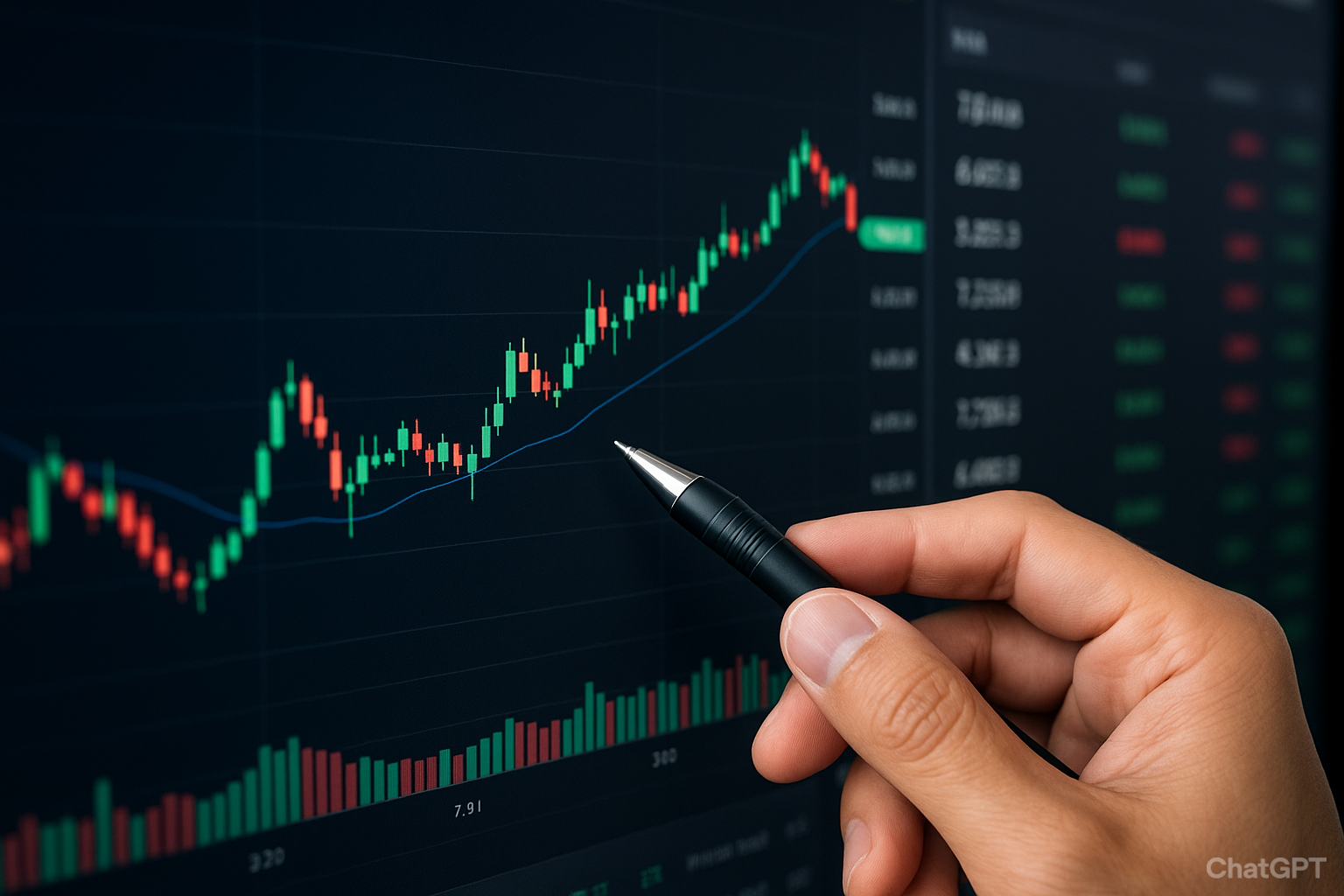
When you wake up in the morning the first thing you think is which stock to choose for intraday trading i know it’s confusing. So here is my opinion on choosing stock. Maybe it’s helpful
Welcome to JD Trading Zone
Many beginners enter random stocks as soon as the market opens. Unfortunately, this is one of the biggest reasons traders lose money.
Professional intraday traders don’t trade every stock. Instead, they spend a few minutes every morning selecting stocks that have the highest probability of making strong price moves.
Disclaimer: This article is for educational purposes only and should not be considered financial or investment advice. Always do your own research and manage risk carefully.
Also check:- (Best Time Frame for Intraday Trading) (Top 10 mistakes new traders make and how to avoid them) (Price action trading explained learn without indicator) (What is support and resistance? complete beginner guide) (Best Indicators for Intraday Trading in India)
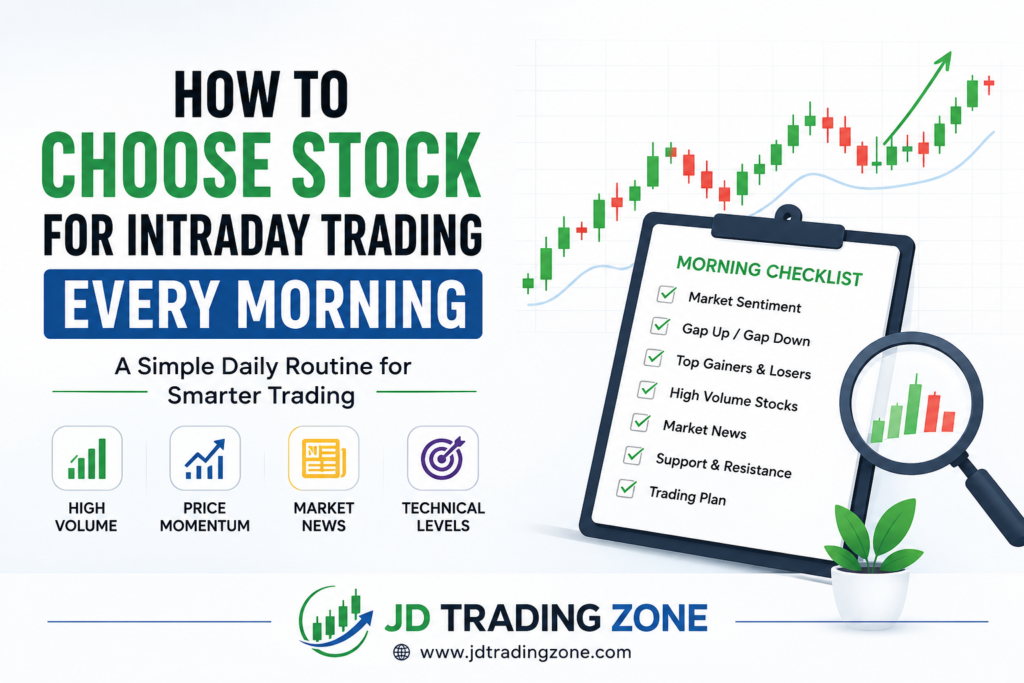
How to Choose Stocks for Intraday Trading Every Morning
Why Stock Selection Is Important
Your trading strategy can only work well if the stock is moving.
• Have strong buying or selling activity
• Move enough during the day
• Be easy to buy and sell
• Follow technical levels clearly
Choosing the right stock is often more important than finding the perfect indicator.
Qualities of a Good Intraday Stock
Before selecting a stock, check whether it has these characteristics.
1. High Liquidity
Liquidity means there are plenty of buyers and sellers.
Benefits include:
• Fast order execution
• Small bid-ask spread
• Less slippage
• Easier entry and exit
Examples often include large-cap stocks.
2. High Trading Volume
Volume tells you how actively a stock is being traded.
Higher volume usually means:
• Better price movement
• More reliable breakouts
• Easier execution
Avoid stocks with very low volume because price movements can become unpredictable.
3. Good Volatility
Intraday traders need price movement to earn profits.
If a stock barely moves throughout the day, there may not be enough trading opportunities.
Look for stocks that regularly move 1–3% or more during active sessions.
4. Clear Trend
Trending stocks are generally easier to trade than sideways stocks.
You can identify trends using:
• Higher highs and higher lows (uptrend)
• Lower highs and lower lows (downtrend)
• Moving averages
• Price action
Morning Routine to Choose Intraday Stocks
Follow this simple checklist before the market opens.
Step 1: Check Global Market Sentiment
Look at:
• SGX Gift Nifty (or equivalent market indicators)
• US market performance
• Asian markets
• Major economic news
Global sentiment often influences the opening direction of Indian markets.
Step 2: Look for Gap-Up and Gap-Down Stocks
Stocks opening significantly above or below yesterday’s close often experience increased volatility.
Focus on:
• Gap-up stocks
• Gap-down stocks
• Stocks opening near important support or resistance
Remember, not every gap is tradable. Wait for confirmation after the market opens.
Step 3: Check the Top Gainers and Top Losers
These stocks already have strong momentum.
Watch them after the first 15–30 minutes.
Sometimes the momentum continues throughout the day.
Step 4: Look for High Volume
Compare today’s early volume with the stock’s average daily volume.
Stocks with unusually high volume often attract institutional participation.
Step 5: Check Market News
Major news events can create strong intraday opportunities.
Examples include:
• Quarterly results
• Company announcements
• Government policies
• RBI updates
• Sector-related news
• Large order wins
Trade only after confirming the price action, not just because of the news.
Best Types of Stocks for Intraday Trading
Many experienced traders prefer:
• Nifty 50 stocks
• Bank Nifty constituent stocks
• Large-cap companies
• Highly liquid stocks
• Stocks with consistent daily volume
These stocks generally offer better liquidity and smoother price movement.
Use Technical Analysis Before Entering
Even after selecting a stock, always confirm the setup using technical analysis.
Useful tools include:
→ Support and Resistance
Look for:
• Previous day’s high
• Previous day’s low
• Swing highs
• Swing lows
These levels often act as important decision points.
→ VWAP
VWAP helps identify whether buyers or sellers are controlling the market.
General interpretation:
• Price above VWAP may indicate bullish strength.
• Price below VWAP may indicate bearish weakness.
• Always combine VWAP with price action instead of using it alone.
→ Volume Confirmation
Never trade breakouts without volume.
Strong volume increases the probability of genuine price movement.
→ Candlestick Patterns
Watch for:
• Bullish engulfing
• Bearish engulfing
• Hammer
• Shooting star
• Inside bar breakout
These patterns become more reliable near key support or resistance levels.
Best Time to Select Stocks
Many beginners start trading immediately after the opening bell.
Instead, consider waiting for the market to settle.
A practical routine is:
• 8:45–9:15 AM: Prepare your watchlist.
• 9:15–9:30 AM: Observe opening behavior.
• 9:30–10:00 AM: Confirm trend, volume, and price action before taking trades.
Waiting for confirmation can help reduce false signals.
Create a Daily Watchlist
Instead of watching hundreds of stocks, narrow your focus.
A simple watchlist might include:
• 5 high-volume stocks
• 3 gap-up stocks
• 3 gap-down stocks
• 2 news-based stocks
After the market opens, remove weaker candidates and focus only on the strongest setups.
Common Mistakes Beginners Make
Avoid these common errors:
• Trading random stocks
• Ignoring volume
• Chasing sudden price spikes
• Trading low-liquidity stocks
• Entering before confirmation
• Ignoring overall market trend
• Taking too many trades
• Trading based only on tips or social media
Discipline is often more important than finding the “perfect” stock.
Example of a Simple Morning Checklist
Use this checklist every trading day:
✅ Check global market sentiment
✅ Review major financial news
✅ Identify gap-up and gap-down stocks
✅ Check top gainers and losers
✅ Filter stocks with high volume
✅ Mark support and resistance levels
✅ Confirm trend using price action
✅ Wait for a proper setup before entering
Following the same routine consistently can improve decision-making over time.
Risk Management Matters
Even the best stock can produce a losing trade.
Always:
• Risk only a small portion of your trading capital on each trade.
• Use a predefined stop-loss.
• Avoid emotional trading.
• Never average down on losing intraday positions.
• Keep a trading journal to review your decisions.
Long-term success comes from consistency, not from winning every trade.
Frequently Asked Questions (FAQs)
Which stocks are best for intraday trading?
→ Stocks with high liquidity, strong trading volume, and sufficient daily price movement are generally preferred for intraday trading.
How many stocks should I watch every morning?
→ Most beginners can focus on 5–10 carefully selected stocks rather than monitoring the entire market.
Is volume important for intraday trading?
→ Yes. High volume often indicates stronger participation and can make price movements more reliable.
Can beginners choose stocks without paid tools?
→ Yes. Many free market platforms provide information on volume, top gainers, top losers, and price charts, which are enough to build a basic watchlist.
Should I trade every gap-up stock?
→ No. Gap-up or gap-down stocks should be evaluated along with volume, trend, and price action before taking any trade.
→
Choosing the right stock every morning is one of the most valuable habits an intraday trader can develop. Rather than relying on luck or random tips, build a repeatable routine: review market sentiment, scan for high-volume and liquid stocks, identify gap opportunities, and confirm setups with technical analysis.
As a beginner, don’t try to trade everything. A focused watchlist, patience, and disciplined risk management can help you make more informed trading decisions over time. Consistency in your preparation is just as important as consistency in your execution.
Pingback: How to Create a Trading Plan That Actually Works - jdtradingzone
Pingback: Trading Psychology: How to Control Fear, Greed, and FOMO - jdtradingzone