In this guide you will learn about what is technical analysis in the stock market, in simple words and beginners friendly.
If you want to become a successful trader or investor, you must understand technical analysis. It is one of the most important skills used by traders to predict price movements and find profitable trading opportunities.
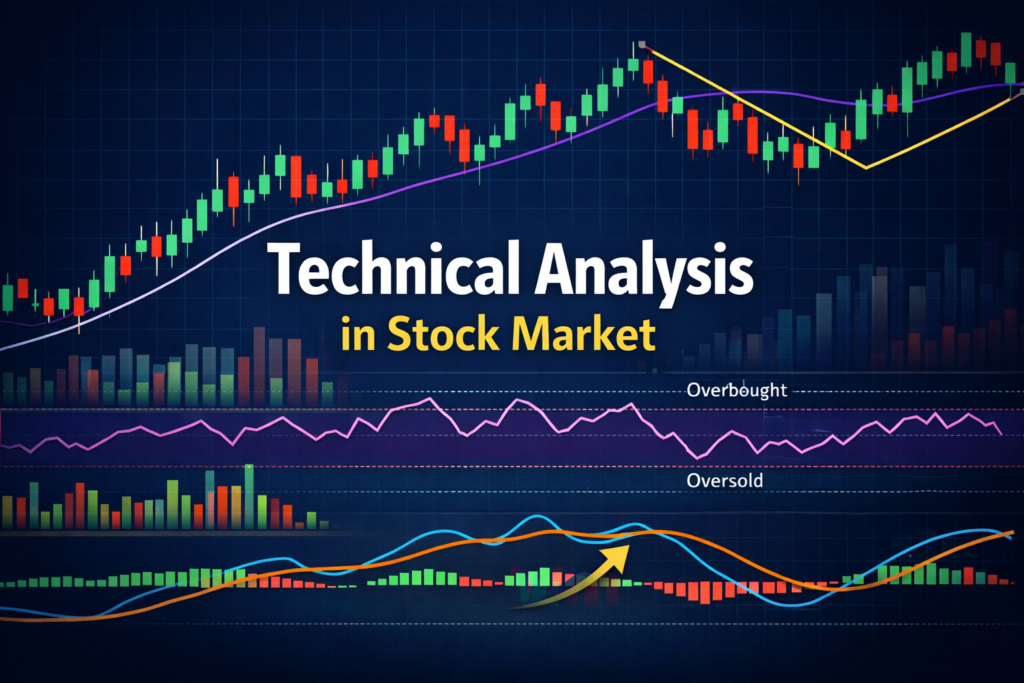
🔍 What is Technical Analysis?
Technical analysis is a method of analyzing stocks, indices, or any financial instrument by studying:
• Price movements
• Chart patterns
• Trading volume
• Indicators and historical data
The main goal of technical analysis is:
✅ To predict future price movements based on past price behavior.
Unlike fundamental analysis, technical analysis does not focus on company profits, news, or balance sheets. It focuses only on price action and charts.
🧠 Basic Principle of Technical Analysis
Technical analysis works on three main assumptions:
1️⃣ Price Discounts Everything
→ All news, results, emotions, and events are already reflected in the price.
2️⃣ Price Moves in Trends
Prices don’t move randomly. They move in trends:
• Uptrend
• Downtrend
• Sideways trend
3️⃣ History Repeats Itself
→ Chart patterns and price behavior repeat because human psychology repeats.
📊 What Do Traders Study in Technical Analysis?
In technical analysis, traders mainly analyze:
• ✅ Price charts
• ✅ Candlestick patterns
• ✅ Chart patterns
• ✅ Support and Resistance
• ✅ Indicators (RSI, MACD, VWAP, Moving Averages, etc.)
• ✅ Volume
(You already use VWAP, MACD & Pivot Points — all are part of technical analysis.)
🛠️ Main Tools of Technical Analysis
📉 1. Charts
• Line Chart
• Bar Chart
• Candlestick Chart (most popular)
🕯️ 2. Candlestick Patterns
Examples:
• Doji
• Hammer
• Engulfing
• Morning Star
• Shooting Star
They help in predicting reversals and continuations.
📐 3. Chart Patterns
Examples:
• Head and Shoulders
• Double Top / Bottom
• Triangle
• Flag & Pole
They show market structure and trend direction.
📏 4. Support and Resistance
• Support = price level where buying comes
• Resistance = price level where selling comes
Very important for:
• Entry
• Exit
• Stop loss
• Target
📊 5. Technical Indicators
Popular indicators:
• RSI
• MACD
• VWAP
• Moving Averages
• Bollinger Bands
• Pivot Points
They help in:
• Finding trend
• Overbought / oversold zones
• Momentum
• Confirmation of signals
⏱️ Who Uses Technical Analysis?
Technical analysis is used by:
• Intraday traders
• Swing traders
• Options traders
• Crypto traders
• Forex traders
It is especially useful for short-term trading.
( what is technical analysis in the stock market)
✅ Advantages of Technical Analysis
✔ Works in any market (stocks, forex, crypto)
✔ Helps in perfect entry & exit timing
✔ Can be used for intraday, swing & positional
✔ Clear risk management using stop loss
✔ Saves time compared to fundamental analysis
Disadvantages of Technical Analysis
❌ Sometimes gives false signals
❌ Needs practice and experience
❌ Indicators can lag
❌ Emotional trading can spoil results
🚀 How Beginners Should Start Technical Analysis
If you are a beginner, follow this order:
1️⃣ Learn candlestick patterns
2️⃣ Learn support & resistance
3️⃣ Learn basic chart patterns
4️⃣ Learn 2–3 indicators (RSI, VWAP, MACD)
5️⃣ Practice on paper trading
6️⃣ Follow strict risk management
🏁 Final Words
Technical analysis is the backbone of trading. If you want consistent profits in intraday or swing trading, learning technical analysis is not optional — it’s mandatory.
📌 Remember: Indicators don’t make money. Discipline, risk management, and psychology do.
If this blog makes sense to you give your feedback in comments and stay tuned.
At the end of the day
Trading isn’t about timing in the market it’s about time in the market.
Pingback: What is Swing trading? - jdtradingzone.com