
This detailed guide explains what is expiry in option trading, how it works, why it matters, and common beginner mistakes—in simple language, with real examples, and written to be AdSense-safe (not thin content).
Option trading can look confusing at first, and one of the most important terms every beginner must understand is expiry. If you don’t understand expiry, you may lose money even when your market view is correct.
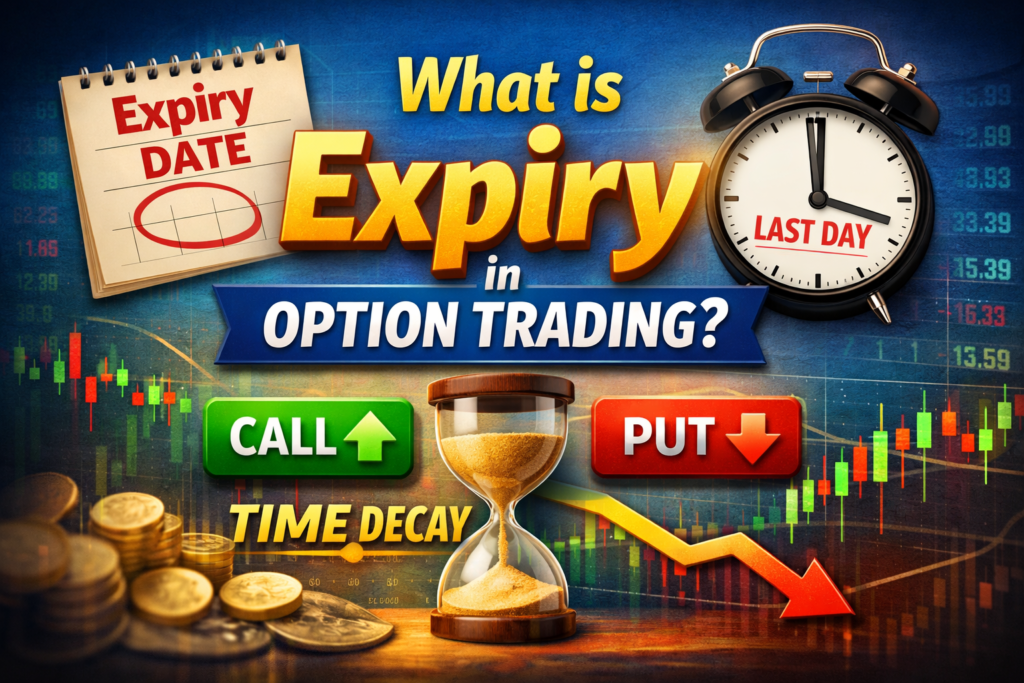
What Is Expiry in Option Trading?
Expiry is the last date on which an option contract is valid.
After this date, the option automatically expires and becomes worthless if it is not profitable.
In simple words:
Expiry is the deadline of an option contract.
Every option (Call or Put) has:
• A strike price
• A premium
• And an expiry date
Once expiry arrives, the option stops existing.
Why does expiry matter so much?
Why Does Expiry Matter So Much?
Expiry is important because options lose value as time passes.
This loss of value is called time decay.
Key reasons expiry matters:
• Option value decreases faster near expiry
• Wrong expiry selection can cause losses
• Premium can become zero on expiry day
• Risk increases as expiry approaches
Many beginners lose money not because direction was wrong, but because expiry was misunderstood.
The Expiry Date in Derivatives Trading
In derivatives trading, the expiry date is the last day on which a derivatives contract (like futures or options) remains valid. After this date, the contract automatically expires and cannot be traded anymore.
In simple words:
Expiry date = The final day to buy, sell, or settle a derivatives contract.
Types of option expiry
Types of Option Expiry
1. Weekly Expiry
• Expires every week
• Popular for intraday & short-term traders
• High risk but quick movement
• Faster time decay
Example:
If today is Monday, the weekly option may expire on Thursday.
2. Monthly Expiry
• Expires on the last Thursday of the month
• Preferred by positional traders
• Slower time decay
• More stable than weekly options
Example:
An option bought in early March may expire on the last Thursday of March.
What happens on the day of expiry in the F&O market?
What Happens on an expiry day
On expiry day, one of three things happens:
1. Option Ends In-The-Money (ITM)
• Option has real value
• Buyer makes profit
• Seller faces loss
2. Option Ends At-The-Money (ATM)
• Price is near strike price
• Mostly expires worthless
3. Option Ends Out-Of-The-Money (OTM)
• No intrinsic value
• Option expires at zero value
• Buyer loses full premium
Example to Understand Expiry Clearly
Suppose:
• NIFTY is trading at 22,000
• You buy 22,100 Call Option
• Expiry is Thursday
On Expiry Day:
• If NIFTY closes at 22,200 → Profit
• If NIFTY closes at 22,100 → No profit
• If NIFTY closes below 22,100 → Full premium loss
👉 Even if NIFTY moved earlier, final price on expiry matters most.
Effect of the Expiry Date on the Stock Price
The expiry date in derivatives (Futures & Options) can influence the stock price or index price, especially near the expiry day. This happens because traders close, roll over, or adjust their positions before the contract expires.
Time Decay and Expiry (Very Important)
As expiry comes closer:
• Option premium falls faster
• Especially on expiry day
• OTM options lose value rapidly
This is why:
• Buyers suffer near expiry
• Sellers benefit from time decay
Time decay is fastest in the last 1–2 days before expiry
Choosing the Right Expiry as a Beginner
Best Practices:
• Avoid buying options on expiry day
• Prefer next week or monthly expiry
• Give your trade enough time to work
• Don’t chase cheap premiums near expiry
Beginner-Friendly Tip:
If you are new, avoid weekly expiry and start with monthly expiry options.
Common Beginner Mistakes Related to Expiry
❌ Buying options very close to expiry
❌ Thinking cheap options mean low risk
❌ Ignoring time decay
❌ Holding losing options till expiry
❌ Assuming expiry guarantees movement
Avoiding these mistakes alone can improve your results drastically.
Expiry vs Delivery (Important Difference)
• Options expire (they have a fixed life)
• Stocks do not expire
This makes option trading riskier than stock investing, especially for beginners.
Final Thoughts
Expiry is the heart of option trading.
You can predict the market direction correctly and still lose money if you ignore expiry and time decay.
Key Takeaways:
• Every option has a fixed expiry date
• Time decay increases as expiry approaches
• Weekly expiry = high risk
• Monthly expiry = beginner-friendly
• Never ignore expiry while placing trades
If you want long-term success in option trading, master expiry first—before strategies or indicators.
If this blog makes sense to you give your feedback in comments and stay tuned for more information.