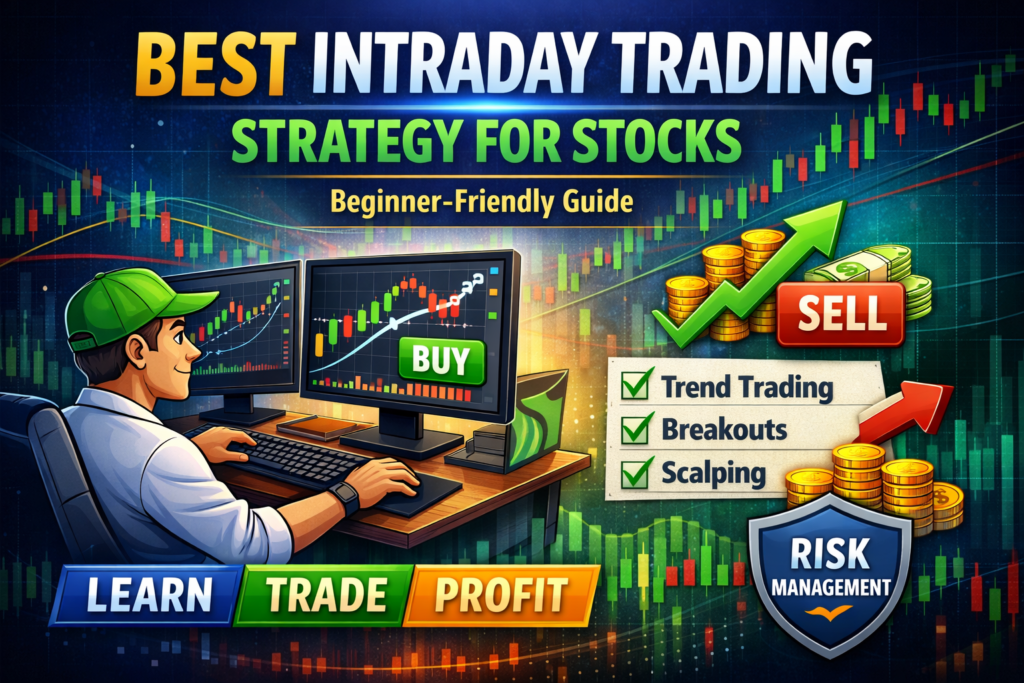
This guide will help you understand simple, practical, and beginner-friendly best intraday trading strategy for stocks that actually work—along with risk management rules that professionals follow.
Intraday trading is one of the most popular ways to make money in the stock market—but it’s also one of the easiest ways to lose money if you don’t follow a proper strategy.
Many beginners enter the market with high expectations and no clear plan. The result? Emotional decisions, unnecessary losses, and frustration.
Also check:- ( Vwap indicator) ( option trading strategy) (how to start intraday trading)
What is intraday trading?
What is Intraday Trading?
Intraday trading means buying and selling stocks within the same day. Traders close all positions before the market closes to avoid overnight risk.
Key Features:
• No overnight holding
• Fast decision-making
• Based on technical analysis
• High risk, high reward potential
Why Most Beginners Fail in Intraday Trading
Before learning strategies, it’s important to understand why most traders lose money:
• No proper trading plan
• Overtrading (too many trades)
• Ignoring stop-loss
• Following tips blindly
• Emotional trading (fear & greed)
👉 Avoiding these mistakes alone can improve your performance significantly.
Best Intraday Trading Strategies for Beginners
1. Trend Following Strategy (Most Reliable)
This is the safest and most beginner-friendly strategy.
How it works:
• Identify whether the market is in an uptrend or downtrend
• Trade only in the direction of the trend
• Avoid counter-trend trades
Tools to use:
• Moving Averages (9 EMA & 21 EMA)
• Price Action
• Volume
Buy Setup:
• Price above EMA 9 & 21
• Pullback to EMA
• Bullish candle confirmation
Sell Setup:
• Price below EMA 9 & 21
• Pullback to EMA
• Bearish candle confirmation
👉 This strategy works best because “trend is your friend.”
2. Breakout Strategy (High Momentum Trades)
Perfect for capturing strong moves in the market.
How it works:
• Identify support and resistance levels
• Wait for breakout with strong volume
• Enter after confirmation
Example:
• Break of previous day high → Buy
• Break of previous day low → Sell
⚠️ Always confirm breakout with volume to avoid false signals.
3. Scalping Strategy (Quick Profits)
Scalping focuses on small but frequent profits.
Key Points:
• Very short trades (1–5 minutes)
• Small targets
• Tight stop-loss
Best for:
• Highly liquid stocks
• Traders who can watch charts continuously
Best Indicators for Intraday Trading
Avoid using too many indicators—keep your chart clean.
Recommended Indicators:
• Moving Averages (EMA 9, 21)
• VWAP (Volume Weighted Average Price)
• RSI (Relative Strength Index)
• Volume Indicator
👉 These indicators help confirm trend, momentum, and entry timing.
Risk Management (Most Important Rule)
No strategy works without proper risk control.
Golden Rules:
• Risk only 1–2% of your capital per trade
• Always use a stop-loss
• Maintain a risk-reward ratio of at least 1:2
• Avoid revenge trading
👉 Professional traders focus more on risk than profit.
Best Time for Intraday Trading
Timing plays a crucial role in profitability.
Ideal Trading Hours:
• 9:15 AM – 10:30 AM → High volatility (best opportunities)
• 10:30 AM – 1:30 PM → Sideways market (avoid or trade cautiously)
• 1:30 PM – 3:15 PM → Trend continuation or reversal
How to Choose Stocks for Intraday Trading
Not all stocks are suitable for intraday trading.
Look for:
• High liquidity
• High trading volume
• Clear trend
• News-based movement
Common Mistakes to Avoid
• Trading without a strategy
• Ignoring market trend
• Using too many indicators
• Holding losing trades
• Overconfidence after profits
Simple Intraday Trading Plan (Step-by-Step)
1. Select 2–3 high-volume stocks
2. Mark support and resistance levels
3. Identify trend using EMA
4. Wait patiently for setup
5. Enter with proper stop-loss
6. Exit using target or trailing stop-loss
Final Thoughts
Intraday trading is not about making quick money—it’s about consistency, discipline, and risk management.
Start small, focus on learning, and master one strategy before trying multiple approaches.
👉 Remember: A good trader focuses on process, not profit.
Disclaimer
Intraday trading involves financial risk. This article is for educational purposes only and not financial advice. Always do your own research before investing.
FAQs
1. Is intraday trading good for beginners?
Yes, but only if you follow proper risk management and avoid emotional trading.
2. How much money is needed to start?
You can start with a small capital, but proper risk management is essential.
3. Which strategy is best for beginners?
Trend-following is the most reliable and beginner-friendly strategy.
If this blog makes sense to you give your feedback in comments and stay tuned for more information.