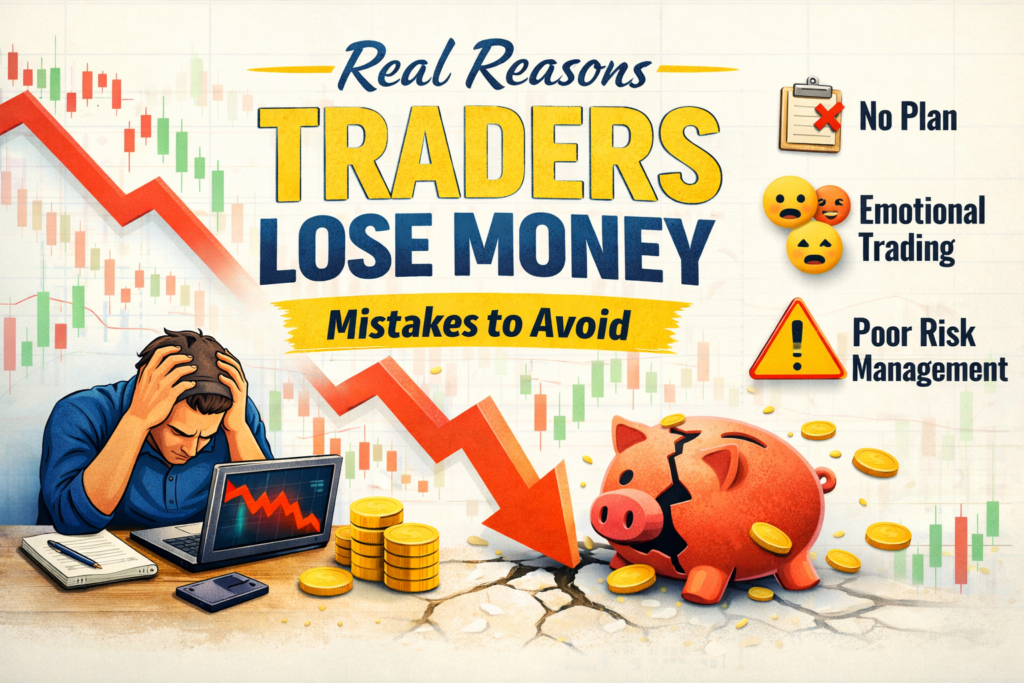
If you’re a beginner, understanding real reasons traders lose money mistakes to avoid can save you from costly errors and help you build a sustainable trading journey.
Many people enter trading with big dreams—quick profits, financial freedom, and a better lifestyle. But the reality is harsh: most traders lose money, especially in the beginning.
The good news?
These losses are not random. They happen because of specific, repeated mistakes.
Also check:- ( option trading strategy with low risk) ( How to make your own strategy in trading) ( How to start stock market investing in India) ( Best intraday trading strategy for stocks)
1. Trading Without a Clear Plan
One of the biggest reasons traders fail is simple—they don’t have a plan.
They enter trades based on:
• Random guesses
• Social media tips
• Market hype
But without a plan, you don’t know:
• When to enter
• When to exit
• How much to risk
What you should do:
Create a simple trading plan with clear entry, exit, and stop-loss rules—and follow it strictly.
2. Ignoring Risk Management
Many beginners focus only on profits and completely ignore risk.
This leads to:
• Big losses in a single trade
• Account wipeouts
• Emotional stress
Smart traders think differently:
They focus on protecting their capital first.
👉 A simple rule:
Never risk more than 1–2% of your capital in one trade.
3. Letting Emotions Control Decisions
Trading is not just about strategy—it’s also about mindset.
The two biggest enemies:
• Greed → holding trades too long
• Fear → exiting too early
There’s also revenge trading, where you try to recover losses quickly and end up losing more.
Solution:
Stick to your rules. Don’t let emotions decide your trades.
4. Overtrading
More trades do not mean more profit.
In fact, overtrading often leads to:
• Poor-quality decisions
• Higher brokerage costs
• Mental fatigue
Better approach:
Wait for the right setup. One good trade is better than five random ones.
5. Lack of Proper Knowledge
Jumping into trading without learning basics is like driving without knowing how to control the car.
Many traders don’t understand:
• Price movement
• Market trends
• Indicators
Start with basics:
• Price action
• Support and resistance
• Simple indicators like VWAP or MACD
6. Blindly Following Tips
Depending only on others for trade ideas is risky.
The problem is:
• You don’t understand the logic
• You panic when the trade goes wrong
• You don’t know when to exit
Better way:
Learn to analyze trades yourself. Use tips only as a secondary reference.
7. Lack of Discipline
Discipline is what separates successful traders from losing ones.
Without discipline, traders:
• Break their own rules
• Skip stop-loss
• Change strategies frequently
Remember:
Trading is a business—not gambling.
8. Unrealistic Expectations
Many beginners expect quick money from trading.
But the truth is:
• Profits take time
• Losses are part of the journey
If your goal is “double money quickly,” you are likely to fail.
Right mindset:
Focus on consistency, not shortcuts.
9. Not Tracking Your Trades
If you don’t review your trades, you won’t improve.
A trading journal helps you:
• Understand your mistakes
• Improve your strategy
• Build discipline
Keep it simple:
Write down entry, exit, reason, and result of each trade.
10. Not Adapting to Market Conditions
Markets are not always the same.
Sometimes they trend, sometimes they move sideways.
Mistake:
Using one strategy in every condition.
Solution:
Understand the market environment and adjust your strategy accordingly.
Final Thoughts
Most traders don’t lose because the market is unfair—they lose because of avoidable mistakes.
If you want to succeed:
• Focus on discipline over profits
• Manage risk properly
• Keep learning and improving
Quick Recap
• Trade with a plan
• Manage your risk
• Control emotions
• Avoid overtrading
• Keep learning
Remember:
Trading is not a get-rich-quick scheme. It’s a skill that requires patience, consistency, and control.
If this blog makes sense to you give your feedback in comments and stay tuned for more information.
Pingback: Best time frame for intraday trading - jdtradingzone.com
Loving the info on this internet site, you have done outstanding job on the blog posts.
Pingback: Best price action trading strategy for beginners - jdtradingzone